Peng-Cheng Sung 1*, Wei-Ru Chen 1, Yi-Ru Huang 1, Ling Shang 1, Tiffany Chiu 2*

1 Department of Industrial Engineering and Management, Chaoyang University of Technology, Taichung, Taiwan

2 School of Business, State University of New York atNew Paltz, New Paltz, New York, United States


Download Citation: |
Download PDF


ABSTRACT


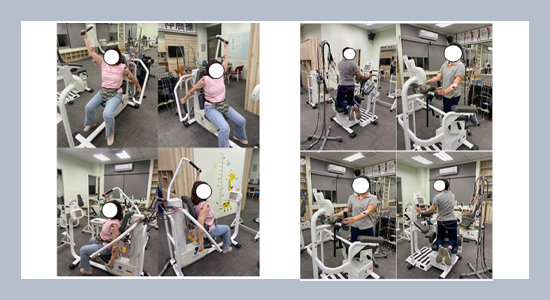
The prevalence of musculoskeletal disorders (MSDs) across different countries, with resulting DAFW and WC claims, indicates that MSDs are significant health problems in the work environment. As the global labor force ages, maintaining regular and adequate levels of physical activity (PA) has been recommended by the World Health Organization (WHO) as one of the protective and proactive strategies to reduce the risk of musculoskeletal disorders, especially for mid-life and older adults. Currently, inconsistent findings have been reported regarding the effectiveness of PA interventions on reducing musculoskeletal symptoms. The inconsistent effects may come from different levels of PA intervention administered across studies or the scarcity of studies that fully complied with the WHO’s recommended PA guideline. Accordingly, this study adopts a psychophysical approach for Taiwanese females of three age groups to determine the maximum acceptable level of physical activity (MAL-PA) using laboratory-owned shoulder-upper extremity and low back-pelvis fitness training equipment. In addition, the strain levels associated with the MAL-PA determined were assessed objectively and subjectively to be further examined for their differences with existing or future studies. The results show that the determined MAL-PA decreased with age while performing functional strengthening exercise using shoulder-upper extremity fitness training equipment and increased with age while performing functional strengthening exercise using low back-pelvis fitness training equipment. The mean heart rates measured associated with MAL-PA showed that the participants are pacing themselves appropriately during each MAL-PA simulation. Subsequently, MAL-PA intervention could be adopted in future studies to make a comparative evaluation of the effects on reducing musculoskeletal symptoms to preserve the worker’s health and safety when achieving and maintaining an active, productive, and prolonged working life.


Keywords: Musculoskeletal disorders, Maximum acceptable level of physical activity, Physiological strain, Subjective strain, Wearable sensing device.


Share this article with your colleagues


REFERENCES


  1.  Andersen, C.H., Andersen, L.L., Gram, B., Pedersen, M.T., Mortensen, O.S., Zebis, M.K., Sjøgaard, G. 2012. Influence of frequency and duration of strength training for effective management of neck and shoulder pain: a randomized controlled trial. British Journal of Sports Medicine, 46, 1004–1010.

  2. Borg, G. 1998. Borg's perceived exertion and pain scales, Champaign, IL: Human Kinetics.

  3. CDC 2023. How to measure physical activity intensity, on the internet at https://www.cdc.gov/physical-activity-basics/measuring/index.html (accessed May 25, 2025), U.S. Centers for Disease Control and Prevention.

  4. Dalager, T., Welch, A., O'Leary, S.P., Johnston, V., Sjøgaard, G. 2023. Clinically relevant decreases in neck/shoulder pain among office workers are associated with strength training adherence and exercise compliance: Explorative analyses from a randomized controlled trial. Physical Therapy, 103,166.

  5. DiDomenicoa, A. and Nussbaum, M.A. 2008. Interactive effects of physical and mental workload on subjective workload assessment, International Journal of Industrial Ergonomics, 38, 977–983.

  6. EUMUSC 2013. Musculoskeletal Health in Europe Report 5.0, , on the internet at https://www.eular.org/web/static/lib/pdfjs/web/viewer.html?file=https://www.eular.org/document/download/440/73b14c75-5759-4d5f-98b8-3a694e233a70/440 (accessed December 20, 2024), The Executive Agency for Health and Consumers (EAHC).

  7. Fredericks, T.K., Kumar, A.R., Karim, S. 2008. An ergonomic evaluation of a manual metal pouring operation. International Journal of Industrial Ergonomics, 38, 182–192.

  8. Hart, S.G., Staveland, L.E., 1988. Development of NASA-TLX (Task Load Index): results of empirical and theoretical research. In advances in psychology. Elsevier, 139–183.

  9. HSE 2024. Work-related musculoskeletal disorders statistics in Great Britain 2024, on the internet at https://www.hse.gov.uk/statistics/assets/docs/msd.pdf (accessed December 20, 2024), Health and Safety Executive, Great Britain.

  10. ILOSH 2011. Screening and disability prevention for musculoskeletal disorders of workers in Taiwan, Annual Report of Labor Safety and Health Research: IOSH100-M318 (in Chinese) (file:///C:/Users/PC%20Sung/Downloads/IOSH100-M318.pdf), Institute of Labor, Occupational Safety and Health, Taipei, Taiwan.

  11. Lee, T.H. 2003. Minimal acceptable handling time intervals for lifting and lowering tasks. Applied Ergonomics, 34, 629–634.

  12. Liu, H., Xu, J., Zhang, X., Gao, C., Sun, R. 2022. Evaluation method of the driving workload in the horizontal curve section based on the human model of information processing. International Journal of Environmental Research and Public Health, 19, 7063.

  13. Machado-Matos, M., Arezes, P.M. 2016. Impact of a workplace exercise program on neck and shoulder segments in office workers. DYNA, 83, 63–68.

  14. Mathiowetz, V., Kashman, N., Volland, G., Weber, K., Dowe, M., Rogers, S. 1985. Grip and pinch strength: normative data for adults. Archives of Physical Medicine and Rehabilitation, 66, 69–74.

  15. Mohammadian, M., Choobineh, A., Haghdoost, A., Hasheminejad, N. 2014. Normative data of grip and pinch strengths in healthy adults of Iranian population. Iranian Journal of Public Health. 43, 1113–1122.

  16. Moreira, S., Ferreira, M.S., Criado, M.B., Machado, J., Mesquita, C., Lopes, S., Santos, P.C. 2021. Occupational Health: Does Compliance with physical activity recommendations have a preventive effect on musculoskeletal symptoms in computer workers? A cross-sectional study. International Journal of Environmental Research and Public Health, 18, 7604.

  17. Sowah, D., Boyko, R., Antle, D., Miller, L., Zakhary, M., Straube, S. 2018. Occupational interventions for the prevention of back pain: Overview of systematic reviews. Journal of Safety Research, 66:39–59.

  18. Sung, P.C. 2022. Efficacy of real-time audio biofeedback on physiological strains for simulated tasks with medium and heavy loads. International Journal of Applied Science and Engineering, 19, 2022308.

  19. Sung, P.C., Chiu, T., Wang, Y. 2024. Effects of physical activity intervention on reducing neck and upper extremity pain intensity for female office computer workers. International Journal of Applied Science and Engineering, 21, 2023420.

  20. Tersa-Miralles, C., Bravo, C., Bellon, F., Pastells-Peiró, R., Rubinat Arnaldo, E., Rubí-Carnacea, F. 2022. Effectiveness of workplace exercise interventions in the treatment of musculoskeletal disorders in office workers: a systematic review. BMJ Open, 12(1), e054288.

  21. TWBLI 2021. Occupational disease case benefits under labor insurance, on the Internet at https://statdb.mol.gov.tw/html/mon/26090.htm (accessed November 15, 2024), Bureau of Labor Insurance, Ministry of Labor, Taipei, Taiwan.

  22. USBLS 2016. Nonfatal occupational injuries and illnesses requiring days away from work, 2015, on the Internet at http://www.bls.gov/news.release/pdf/osh2.pdf (accessed November 15, 2024), Bureau of Labor Statistics, U.S. Department of Labor.

  23. USBLS 2020. Injuries, Illnesses, and Fatalities: Occupational injuries and illnesses resulting in musculoskeletal disorders (MSDs), on the Internet at https://www.bls.gov/iif/factsheets/msds.htm (accessed December 25, 2024), Bureau of Labor Statistics, U.S. Department of Labor.

  24. Van Eerd, D., Munhall, C., Irvin, E., Rempel, D., Brewer, S., van der Beek, A.J., Dennerlein, J.T., Tullar, J., Skivington, K., Pinion, C., Amick, B. 2016. Effectiveness of workplace interventions in the prevention of upper extremity musculoskeletal disorders and symptoms: an update of the evidence. Occupational and Environmental Medicine;73, 62–70.

  25. WHO 2024. Physical Activity, on the Internet at https://www.who.int/news-room/fact-sheets/detail/physical-activity (accessed November 15, 2024), World Health Organization, Geneva, Switzerland.


ARTICLE INFORMATION


Received: 2024-12-12
Revised: 2025-06-27
Accepted: 2025-06-30
Available Online: 2025-07-15


Cite this article:

Sung, P.C., Chen, W.U., Huang, Y.U., Shang, L., Chiu, T. 2025. Effects of the maximum acceptable level of physical activity on physiological and psychological strains for Taiwanese females of different age groups. International Journal of Applied Science and Engineering, 22, 2024426. https://doi.org/10.6703/IJASE.202506_22(2).005

  Copyright The Author(s). This is an open access article distributed under the terms of the Creative Commons Attribution License (CC BY 4.0), which permits unrestricted use, distribution, and reproduction in any medium, provided the original author and source are cited.